
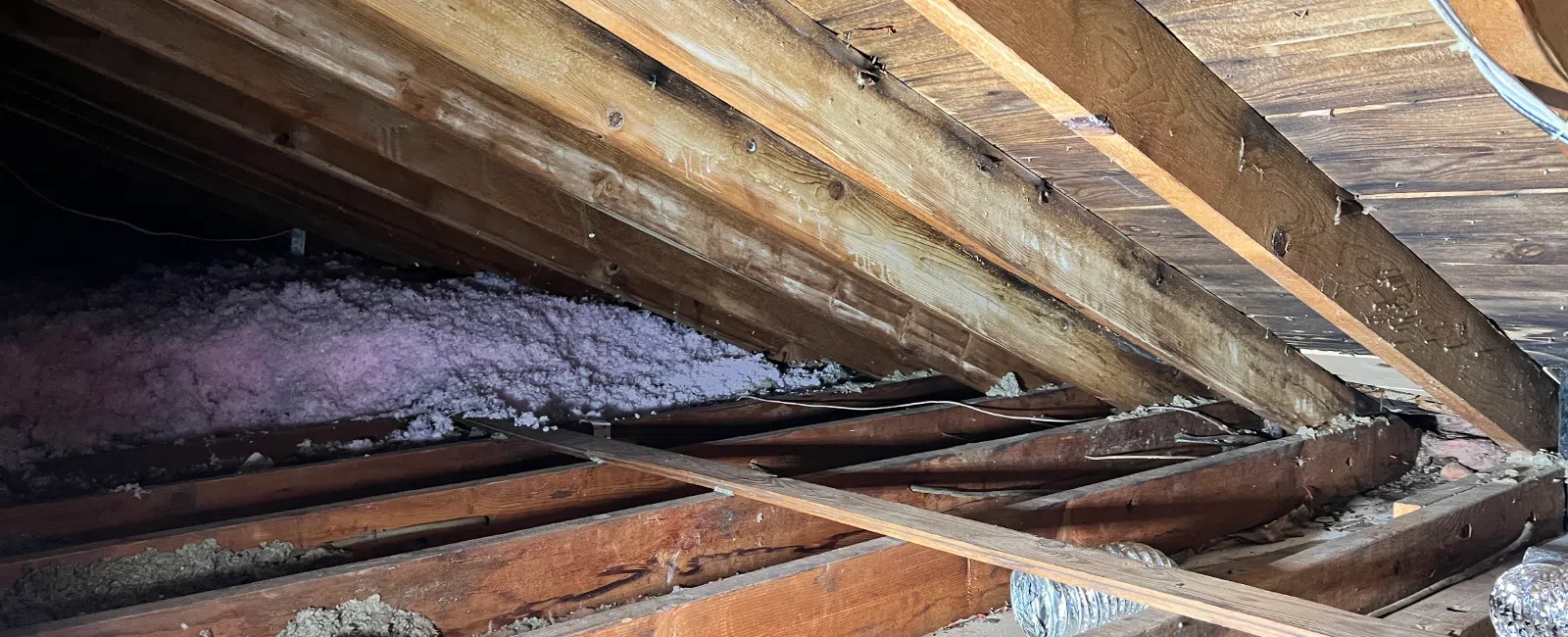
Most insulation that gets soaked, stays wet past 24 to 48 hours, or shows mold should be removed and replaced, because porous insulation holds water against the wood around it. A small damp spot from a leak that was fixed quickly may only need drying. Either way, stop the water first and check the framing underneath. A dripping ceiling after a storm, a water heater that let go in the basement, or a musty smell in the attic after the first snow melt: around Pittsburgh, wet insulation usually shows up in one of those ways. Whether your home is in Carnegie, Ross Township, Bethel Park or Upper St Clair, attics, crawlspaces and knee walls are places where water can settle in without anyone noticing right away. Mold Medics Pittsburgh is based in Carnegie and works with homeowners from Wexford and Cranberry Township down to Canonsburg, and from Moon over to Monroeville. Mold Medics Pittsburgh handles insulation removal and replacement along with mold remediation, so when insulation gets wet, we look at the whole picture: the water, the insulation and the wood around it.
What usually gets insulation wet?
Knowing where the water came from tells you a lot about how much insulation is affected and what needs fixing before anything new goes in. These are the usual causes.
- Roof leaks. Worn shingles, failed flashing around a chimney or vent, or storm damage can let water drip onto attic insulation for weeks before a ceiling stain appears.
- Ice dams. When snow melts on a warm roof and refreezes at the cold edge, water can back up under the shingles and into the attic along the eaves.
- Plumbing leaks. A slow drip from a supply line, drain or fixture can soak insulation in a wall, floor or ceiling cavity.
- Condensation. Warm, moist air meeting cold surfaces can leave insulation damp, especially around uninsulated pipes, poorly vented bathroom fans or a humid attic.
- Basement and crawlspace water. Groundwater, a failed sump pump or water seeping through a foundation can wet the insulation in rim joists and crawlspace ceilings.
Your first steps when you find wet insulation
The first day matters most. Here is what to do in the first hours and the first 24 hours.
- Stop the water if you can. Shut off the water supply to a leaking fixture, or catch roof drips with a bucket or tarp. The EPA says to fix plumbing leaks and other water problems as soon as possible.
- Keep yourself safe. Turn off power to any wet area with lights or outlets, and do not stand under a sagging, soaked ceiling.
- Take photos. Photograph the wet insulation, the ceiling or wall below and the source of the water. That record helps with the repair and any conversations that follow.
- Note the time. Write down when you found the water. The EPA says that if wet materials are dried within 24 to 48 hours, in most cases mold will not grow, so the clock matters.
- Get air moving. Open the attic hatch or crawlspace access if it is safe, run fans and a dehumidifier, and keep the area as dry as you can.
- Do not pack it back in. Avoid stuffing wet insulation back into place or covering it with plastic. That traps moisture against the wood.
- Have it checked within the first day or two. A moisture check can show how far the water spread, which is often farther than it looks from below.
Can soaked insulation really be dried out?
Sometimes, but not often. Most attic and wall insulation is porous. It soaks up water, holds it and dries slowly, especially when it is packed into a closed cavity.
The EPA's water damage cleanup guidance lists "discard and replace" for wet fiberglass and cellulose insulation. Separately, the EPA notes that porous materials that become moldy may have to be thrown away. Put together, the general rule is that insulation that got soaked or stayed wet past a day or two usually comes out.
When might a damp spot just need drying?
There are cases where a full removal is more than you need. If a small area got slightly damp, the leak was found and fixed right away, and the insulation dries out within that 24 to 48 hour window, drying may be enough.
That is a judgment call, and it depends on what is underneath. A small surface spot is very different from insulation that is wet all the way through or has been sitting damp for weeks. When in doubt, check with a moisture meter before deciding.
What happens if wet insulation is left in place?
Wet insulation keeps the wood around it damp. That can mean staining on the ceiling below, a musty odor that does not go away and mold growth on rafters, joists, sheathing or subfloor.
Wet insulation also tends to sag and flatten. Even after it dries, it may not fill the space the way it used to, which leaves gaps behind.
Why check the framing, subfloor and roof deck underneath?
The insulation is only part of the picture. Water that soaked it also reached whatever it was touching.
- In the attic, look at the roof deck and rafters above the wet spot and the ceiling joists and drywall or plaster below it.
- In floors and crawlspaces, check the subfloor and joists. EPA cleanup guidance notes that the subfloor under wet flooring also has to be cleaned and dried.
- In walls, look at the studs, sill plate and the back side of the wall finish.
If there is growth on that wood, it needs to be cleaned and treated before new insulation goes in. Covering it up only hides it.
Why does the cavity need to be dry before new insulation goes in?
New insulation installed over damp wood or into a wet cavity starts the problem over again. The moisture has nowhere to go, and the new material soaks it up.
That is why the order is always the same: fix the water, remove the wet or moldy insulation, clean and treat the wood, confirm it is dry, and then install new insulation. Skipping the drying step is an easy way for the same problem to come back.
How do Pittsburgh homes end up with wet insulation?
The region's housing and weather both play a part. Western Pennsylvania has many older homes, and the seasons give water a lot of ways in.
- Snowy winters with freeze-thaw. Ice dams and repeated freezing and thawing are hard on roofs, gutters and flashing, which is how a lot of attic insulation gets wet.
- Wet falls. Long stretches of rain test older roofs and gutters, and leaks that start in fall often go unnoticed until winter.
- Humid summers. Warm, damp air finds its way into attics and basements, and condensation can build up on cool pipes and ducts.
- Hillside lots and stone or block foundations. Water running downhill toward an older foundation can keep crawlspaces and rim joists damp.
- Brick row houses with shared walls. A leak at a shared roof or wall can wet insulation on your side even when the source is next door.
- Plaster walls. Plaster can hide a slow leak in a wall cavity longer than drywall would.
How can you keep insulation dry going forward?
Most of it is everyday upkeep. A few habits go a long way.
- Clean gutters and downspouts in the fall and keep water draining away from the foundation.
- Look in the attic after big storms and heavy snow melts for drips or stains.
- Make sure bathroom and kitchen fans vent outside, not into the attic.
- Insulate cold water pipes. The EPA lists this as a way to prevent condensation.
- Keep indoor humidity below 60 percent, ideally between 30 and 50 percent, as the EPA recommends.
Can you remove wet insulation yourself?
For a small, clean spot, some homeowners do. The EPA says moldy areas under about 10 square feet can usually be handled by the homeowner. Larger areas, or anything involving a lot of water, are better left to a professional.
One caution for older homes: if you find loose, pebble-like insulation that is gray-brown or silver-gold, it may be vermiculite. Do not disturb it. Have a qualified professional evaluate it first.
How Mold Medics Pittsburgh handles wet and moldy insulation
We start with a free visual mold inspection using a thermal imaging camera and a moisture meter. That shows us how far the water traveled through the insulation and framing, so you know what actually needs to come out.
When there is mold involved, we follow our 6 Steps to Victory: Assess, Contain, Remove, Vacuum with HEPA equipment, Wipe Down, and Anti-Microbial Application. HEPA air scrubbers keep the work area contained while we work. Once the cavity is clean and dry, new insulation can go in.
Found wet insulation? Get a clear answer
Whether it is a ceiling stain, a soaked crawlspace or a musty attic after a storm, you do not have to guess about what stays and what goes. Book a free visual mold inspection with Mold Medics Pittsburgh.