Mold remediation cost in Pittsburgh depends on the conditions in your home: how much area is affected, where the mold is, what materials it has grown into, and whether the moisture source is still active. No honest company can give you a real number without seeing it. The most reliable way to get one is an on-site assessment, and Mold Medics offers a free visual inspection.
If you have searched for mold removal cost in Pittsburgh, PA, the answers are all over the place. That is because every home is different. Many houses here are decades old, with stone or block foundations, plaster walls, and basements that were finished long after the house was built. Add wet falls, freeze-thaw winters, and hillsides that send water toward the foundation, and you get mold problems that range from a small patch on a basement wall to growth hidden behind drywall.
What Factors Affect the Cost of Mold Remediation?
Your quote is built from the scope of work. Here is what our team looks at.
Factor |
Why it matters |
|---|---|
Size of the affected area |
More area means more containment, material, and time on site. |
Location and access |
Crawl spaces, attics, and finished walls take more work to reach. |
Materials affected |
Nonporous surfaces can often be cleaned. Porous materials like drywall, carpet, and insulation often need to be removed. |
Moisture source |
If a leak or humidity problem is still active, it has to be addressed or the mold will return. |
Containment and air filtration |
Sealed work areas and HEPA air scrubbers keep spores from spreading. |
Amount of material removal |
Tearing out drywall, paneling, or carpet adds labor and disposal. |
Testing needs |
Some situations call for air or surface sampling before or after the work. |
Repair and reconstruction |
Rebuilding is usually separate from remediation. |
Size of the affected area
The larger the area, the bigger the job. According to the U.S. EPA, homeowners can often handle small areas of mold themselves (the EPA uses roughly 10 square feet as a guide), while larger areas are a good reason to call a professional. What you can see is not always the whole picture.
Location and access
An open basement is fairly direct. A low attic, a dirt-floor crawl space, or a finished basement takes more setup and more careful removal. Basement mold removal cost often depends on whether the space is finished, because finished walls can hide growth that has to be opened up and checked.
Porous vs nonporous materials
Hard, nonporous surfaces like metal, glass, and sealed concrete can usually be cleaned and treated. Porous materials such as drywall, ceiling tiles, insulation, and carpet absorb moisture and allow mold to grow into them. The EPA notes that porous materials with mold growth may need to be thrown away.
The moisture source
If your basement still takes on water when it rains, or a pipe is still dripping, remediation alone will not solve the problem. Common culprits in Pittsburgh include clogged gutters (especially after the leaves drop in fall), grading that slopes toward the house, cracks in older foundations, and high basement humidity.
Containment and HEPA air filtration
Disturbing mold releases spores. On many jobs, we seal off the work area with plastic sheeting and run HEPA-filtered air scrubbers. More rooms usually means more containment.
Testing
Not every job needs lab testing. A visible problem with a clear moisture cause can often move straight to remediation. Testing can make sense when you smell mold but cannot find it, when someone in the home has health concerns, or when you want confirmation after the work is done. Ask how mold inspection cost and testing fit into your quote.
Repairs and reconstruction
Rebuilding (new drywall, paint, flooring, trim) is usually a separate step from remediation. Make sure you know which parts are included.
Why Pittsburgh Homes Can Be Tricky
Older Pittsburgh homes have a few things in common that affect scope:
- Stone and block foundations can let moisture wick through the walls, which keeps basements damp.
- Finished basements added years after construction may have paneling or drywall over damp masonry, which can hide growth.
- Hillside lots and river valleys near the Allegheny, Monongahela, Ohio, and Chartiers Creek can mean more water pressure against foundations.
Fall is a smart time to act. Once furnaces kick on in October and windows stay shut, a damp basement has months to get worse. Catching a problem before winter can help keep the job smaller.
How Does the Mold Medics 6 Steps to Victory Process Work?
Every remediation we do follows the same process, which also shows you what you are paying for.
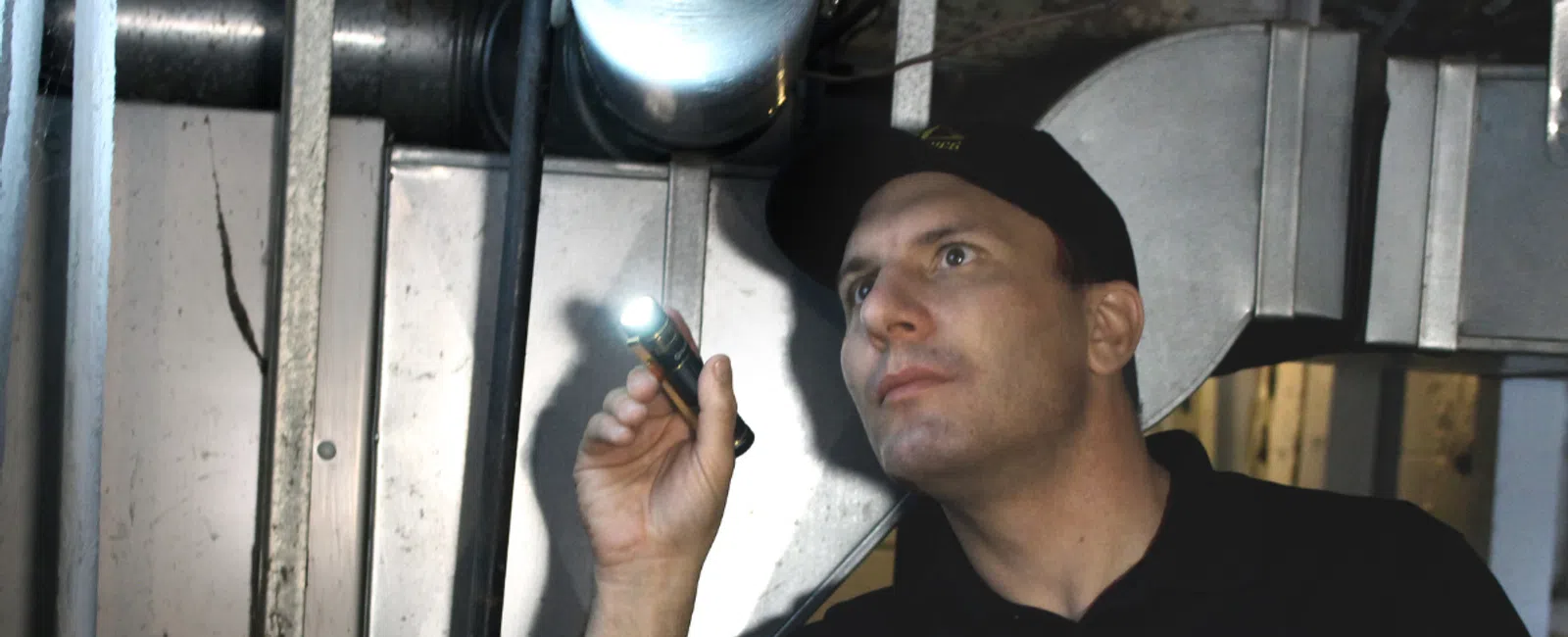
- Assess. We inspect the area using thermal imaging and moisture meters to find the extent of the mold and the moisture behind it.
- Contain. We set up containment to keep spores from spreading to clean parts of your home.
- Remove. We remove mold-damaged materials that cannot be saved.
- Vacuum. We HEPA vacuum surfaces to capture remaining spores and debris.
- Wipe Down. We clean and wipe down affected surfaces.
- Anti-Microbial Application. We apply EPA-registered products, often with electrostatic spraying, that are safe for people and pets.
What Questions Should You Ask Before You Hire?
Before you sign anything, ask:
- What exactly is included in the scope of work?
- Where is the moisture coming from, and how will it be addressed?
- Will you use containment and HEPA air scrubbers?
- Which materials will be removed, and which will be cleaned?
- Is testing recommended, and why?
- Does the quote include repairs, or only remediation?
- What certifications does your team have, and can I see your reviews?
Mold Medics is an IAQA member and a NADCA member, has earned the Angi Super Service Award in 2022 and 2023, and has more than 650 five-star Google reviews.
How Do You Compare Mold Remediation Quotes?
Compare scope, not just the bottom line.
- Line up the square footage. Are both companies treating the same area?
- Check containment. One bid may include sealed containment and air scrubbers while another skips it.
- Look at removal. Does each quote remove the same materials?
- Ask about the moisture source. A quote that ignores the cause may lead to repeat work.
- Confirm what is excluded. Rebuilding, testing, and disposal can vary.
A lower number that leaves out key steps is not really a lower number if the mold comes back.
Frequently Asked Questions
How much does mold remediation cost in Pittsburgh?
It depends on the size of the area, its location, the materials involved, and whether the moisture source is still active. The best way to get an accurate number is an on-site assessment. Mold Medics offers a free visual inspection.
Is basement mold removal more involved than other areas?
It can be. Pittsburgh basements often have stone or block walls that let moisture in, and finished basements can hide mold behind paneling or drywall.
Do I need mold testing before remediation?
Not always. When mold is visible and the cause is clear, testing may not be needed. Testing can help when you suspect hidden mold or want confirmation after the work.
Does remediation include rebuilding walls and floors?
Usually not. Remediation covers removing mold and treating the area, while reconstruction is typically separate. Ask any contractor to spell out exactly what is included.
Can I remove mold myself?
According to the U.S. EPA, small areas (roughly 10 square feet or less) can often be handled by a homeowner with proper precautions. Larger areas, hidden mold, or mold tied to ongoing water problems are better left to a professional. If you have health concerns, talk to your doctor.
Get an Exact Quote With a Free Visual Inspection
Our team will use thermal imaging and moisture meters to see what is really going on, then give you a clear scope and an exact quote. We kick mold butt fast, and we will explain every step before we start.
Call Mold Medics Pittsburgh at 412-447-5582 to schedule your free visual mold inspection. We are based in Carnegie and serve homeowners across the South Hills, North Hills, and greater Pittsburgh area, from Mt. Lebanon and Bethel Park to Cranberry Township and Monroeville. Protecting your homefront from mold is what we do.