
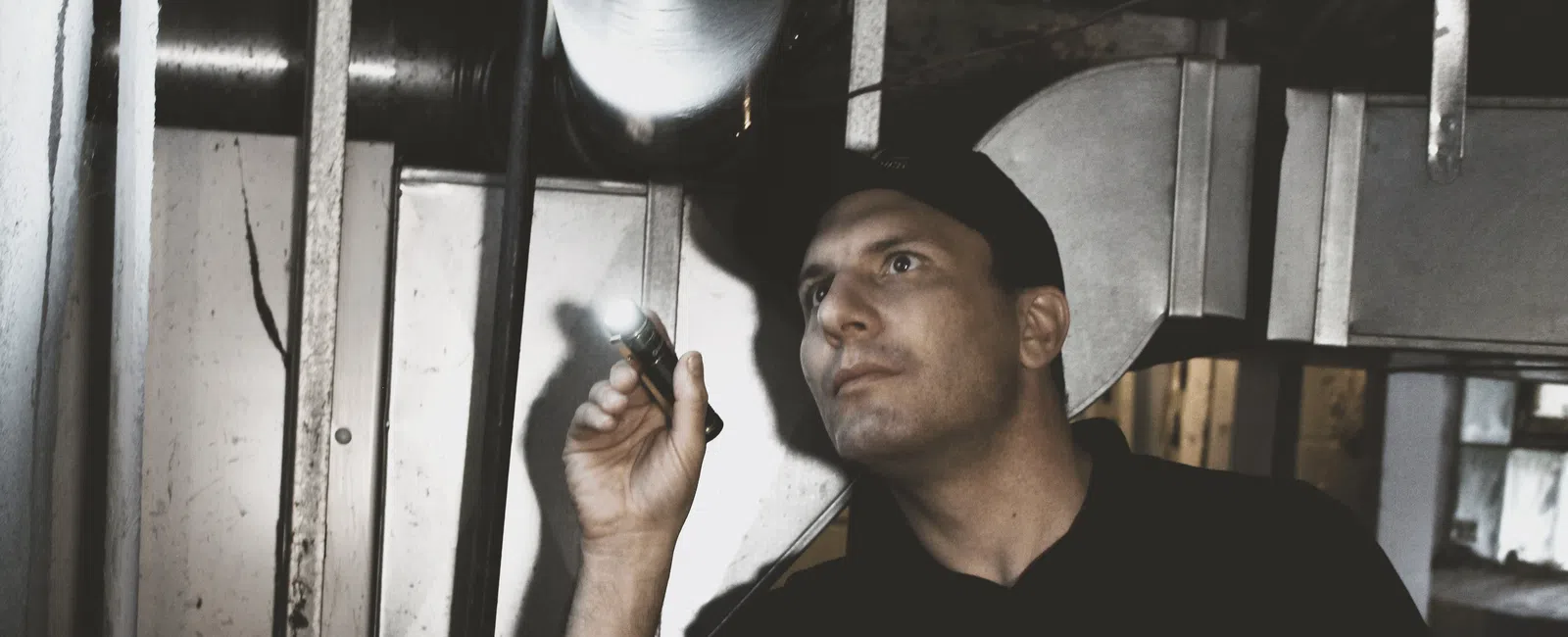
Homeowners often use the phrases "mold inspection" and "mold testing" as if they mean the same thing. They are related, but they answer different questions.
A mold inspection is an investigation of the home and the conditions around the concern. We look for visible growth, water damage, moisture patterns, likely leak sources, and areas where mold could be hidden. Mold testing involves collecting samples to gather additional information about mold in the air or on a surface.
The easiest way to remember the difference is this: inspection is about finding and understanding the problem, while testing is a tool that can add information in certain situations.
That distinction matters because you do not want to order a test just because the word "mold" is involved. You want the service that helps answer the question you actually have.
What happens during a mold inspection
When we inspect a mold concern, we start with your observations. You know the history of your home better than anyone. Tell us where you smell the odor, when the stain appeared, whether there was a plumbing leak, whether the roof has had problems, and whether the condition changes after rain or after using a certain appliance.
Then we evaluate the area itself. A visual inspection looks for obvious growth, staining, damaged materials, condensation, and signs that water has moved through the building. Our assessment can also include moisture readings and thermal imaging to help us locate damp conditions or patterns that are not obvious from the surface.
The inspection is not limited to identifying a colored spot. We are trying to answer practical questions:
Where is the moisture coming from?
What materials are affected?
How far does the problem appear to extend?
Is the area currently wet or is this evidence of an older event?
Does the situation call for remediation, additional investigation, or another repair first?
Those answers usually drive the next step more directly than the name of a mold species.
What mold testing actually does
Mold testing collects a sample for analysis. Depending on the purpose, sampling can involve air or a surface. The laboratory result can provide information about what was collected at that location and time.
Testing can be useful when you need information that a visual inspection cannot provide. For example, you may have a persistent musty odor but no visible growth. There may be a concern after a water event in an area that is difficult to access. A homeowner, property manager, or other party may want documented sample results as part of a broader decision.
The key is having a reason for the sample. A test should answer a question. If no one can explain what decision will change based on the result, the sample may not add much value.
Why testing is not always the first step
Imagine you open the cabinet under your kitchen sink and find visible mold on water-damaged material next to an active plumbing leak. You already know three important things: water is present, building material is affected, and the source needs repair.
A mold sample does not change the need to stop the leak. It also does not make water-damaged material less damaged. In a case like that, inspection and scope can be more useful than leading with testing.
Now imagine a different situation. A bedroom has a persistent musty odor, the wall looks normal, and there is no known leak. That problem raises different questions. An inspection may focus on moisture, exterior walls, windows, flooring, HVAC connections, adjacent bathrooms, or attic and crawl-space areas. Testing could become useful depending on what the investigation finds and what you need to know.
The right choice depends on the question, not on a one-size-fits-all rule.
What a test result cannot tell you by itself
A laboratory report can provide data, but it does not automatically explain the building.
It cannot repair a leak.
It cannot tell you that a wall cavity is dry unless moisture conditions were evaluated separately.
It cannot show the full extent of contamination hidden behind every finished surface.
It cannot replace a physical inspection of water-damaged materials.
This is why we prefer to interpret testing in context. If a result is separated from the condition of the home, it is easy to focus on numbers while missing the moisture problem that actually needs attention.
Inspection first makes the testing question smarter
A good inspection helps narrow down where a sample would be most useful, if sampling is needed at all. Instead of randomly testing rooms, we can use the history of the home and the physical findings to decide what question needs to be answered.
For example, if one wall has repeated staining below a window, the first priorities are checking for water intrusion and evaluating the affected materials. If you smell an odor only when the HVAC runs, the investigation may include areas around the system and airflow pathways. If mold is visible in a bathroom with heavy condensation, ventilation and surface moisture deserve attention.
The more we understand about the building, the more meaningful any testing decision becomes.
A simple homeowner decision guide
Choose an inspection as your starting point if you see water damage, smell a persistent musty odor, find recurring discoloration, discover a past leak, or simply do not know where the problem is coming from.
Ask about testing if there is a specific unanswered question after the initial evaluation, if no visible source explains the concern, or if documentation is useful for your situation.
Move toward remediation when there is confirmed visible mold contamination or water-damaged material that needs professional removal and cleaning. The scope should be tied to the materials and area affected, not just to a test result.
Address the moisture source at the same time. Without moisture control, even a well-cleaned area can be exposed to the same conditions again.
What our inspection process can look like
When you contact us, we ask what you have noticed and where. The more detail you can give us, the better. A photo of a stain, the date of a leak, or a description of when an odor is strongest can help us focus the visit.
At the home, we visually assess the concern and use tools such as a moisture meter and thermal imaging camera when they are appropriate to the situation. We look for the source and scope, not just the surface appearance.
If we believe testing can help, we explain why. If it will not change the immediate recommendation, we tell you that too. Our goal is not to sell a sample. Our goal is to help you understand your home and make a sound decision.
What happens if the inspection finds mold
Finding mold does not mean every surface in the room has to be removed. Remediation depends on the amount of growth, the materials involved, the moisture history, and the accessibility of the area.
For a remediation project, our process can include containment around the work area, HEPA-filtered air scrubbing, removal of mold-contaminated or water-damaged material that cannot be reasonably cleaned, HEPA vacuuming, surface cleaning, and an antimicrobial application based on the scope.
We also want the moisture source corrected. That may mean a plumber, roofer, HVAC professional, or another trade needs to repair the underlying problem. We can remove contamination, but a recurring leak has to be stopped if you want the area to stay dry.
Common questions about inspection and testing
Can I buy a home mold test kit and do this myself?
You can buy consumer test kits, but the hard part is usually not collecting something from the air or a surface. The hard part is interpreting the result in the context of your home. If you already see mold next to water damage, a kit does not tell you how far the material is affected or what caused the leak. If you do not see mold, a sample without a building investigation can still leave you with the same question about where moisture is coming from.
Does a mold inspection require opening walls?
Not automatically. We begin with non-destructive observations and moisture evaluation. If the evidence points to concealed damage and opening a material becomes necessary, that should be discussed as part of a controlled next step rather than done casually during every inspection.
If I know the mold type, will that change how you remove it?
Remediation is driven heavily by the extent of growth, the affected materials, and moisture conditions. The priority is safe containment, removal or cleaning of contaminated material, and correction of the water source. Knowing a specific mold type can provide information, but it does not make moisture control optional.
Can testing prove my home is completely mold-free?
No practical test can prove that a normal home contains zero mold spores. Mold spores exist naturally in indoor and outdoor environments. Testing is better used to answer a defined question than to promise an absolute condition.
What should I do before an inspection?
Avoid heavy cleaning of the exact area you want evaluated just before the appointment. If there is an active leak, address it as soon as you safely can. Gather any photos or information about previous leaks and repairs. Most importantly, write down what you have noticed, including odors, timing, and rooms affected.
Use the right tool for the question
Inspection and testing are not competing services. They work best when each has a clear purpose. The inspection gives us the building context. Testing can add data when that data helps answer a specific question. Remediation addresses contamination that needs to be removed or cleaned.
If you are unsure where to start, you do not have to choose on your own. Contact our Mold Medics team and tell us what is happening in your home. We can help you decide whether an inspection, testing, remediation, or a repair by another trade makes the most sense as the next step.