
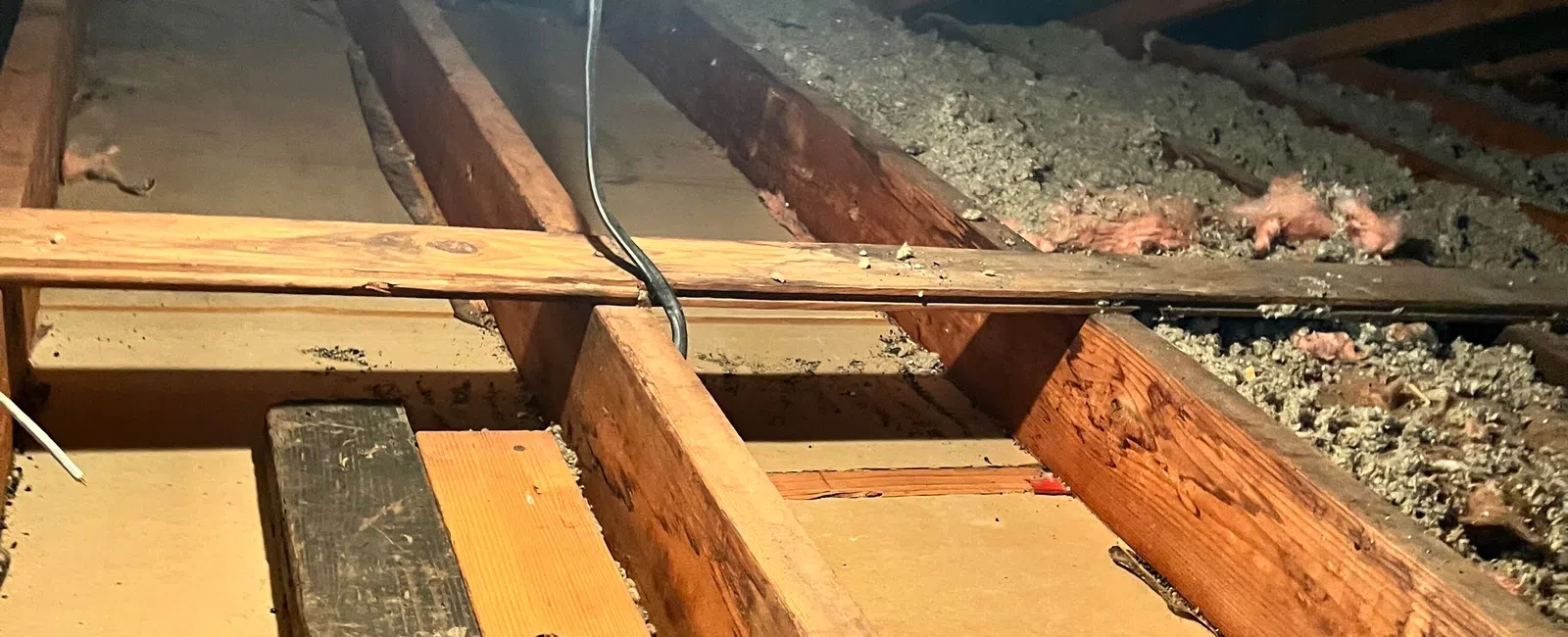
If your attic insulation is matted, thin, wet, stained, or full of animal nesting, replace it before winter, but fix the cause first. Seal air leaks from the house below, make sure soffit vents are open and bathroom fans vent outside, then remove the damaged insulation, clean and treat any affected wood, and put new insulation back in. Late October is a good time to climb up and take a look. The leaves are coming down from Mt Lebanon to Fox Chapel, the furnace is starting to run, and you still have a little room on the calendar before snow and freeze-thaw make the roof and attic harder to work around. Our team works out of Carnegie and sees attics all over the area, from older homes in Squirrel Hill and Shadyside to newer neighborhoods in Cranberry Township, Wexford and Moon. The details change from house to house, but the questions homeowners ask in the fall are almost always the same.
Why does fall matter so much for attic insulation?
Your attic does its hardest work in winter. Once the heat is on, warm air inside the house pushes up toward the ceiling and looks for any gap it can find. If the insulation is in poor shape and the ceiling has leaks, that warm air reaches the cold attic, and that is where trouble starts. Fall gives you a clear window to inspect and plan. The attic is cooler than it was in August, so it is more comfortable to move around up there. Any issues you find can be sorted out while the weather still cooperates, instead of in the middle of a cold snap when a roof leak or a wet ceiling forces the decision for you.
How do I look into my attic safely?
You do not need to crawl across the whole attic to learn a lot. In many homes, a careful look from the hatch or pull-down stairs with a good flashlight tells you most of what you need to know.
- Go up on a mild day, not a hot afternoon, and tell someone in the house you are up there.
- Wear a dust mask, gloves, long sleeves and eye protection. Old insulation is dusty and messy to handle.
- Step only on the framing (joists or trusses) or on a solid walkway. The ceiling drywall or plaster between them will not hold your weight.
- Watch your head on roofing nails that poke through the roof deck.
- Do not pull back or move insulation by hand if it looks wet, moldy, or full of droppings. Note what you see, take photos, and leave it for a professional.
What signs mean my attic insulation needs to be replaced?
Insulation can sit quietly for years without a problem, so it is worth knowing what worn-out insulation actually looks like. Here are the signs we look for first on an attic visit.
- Dark staining on the roof decking or nails. Gray or black spots on the underside of the plywood or boards, or rusty nail tips, often point to moisture that has been condensing on cold surfaces.
- Frost or wet spots. In colder weather, frost on nail tips or sheathing means moist air is getting into the attic. Wet patches on the insulation can come from that same moisture or from a roof leak.
- Matted or thin insulation. Insulation that has packed down, been walked on, or gotten wet loses its loft. If you can easily see the tops of the ceiling joists, there may not be much left doing the work.
- Gaps and bare spots. Areas around the hatch, along the edges, and near recessed lights are often missed or disturbed by past projects.
- Animal activity. Tunnels, nesting, droppings and chewed material mean the insulation has been disturbed and contaminated, and it usually needs to come out.
- Blocked soffit vents. If insulation is stuffed against the roof edge where the intake vents are, outside air cannot move through the attic the way it should.
- Bathroom fans venting into the attic. A fan duct that ends in the insulation, or that has fallen off its roof or wall vent, dumps warm, damp shower air right where you do not want it.
Why does warm air leaking into a cold attic cause mold?
Warm indoor air carries moisture from showers, cooking, laundry and everyday living. When that air slips through gaps in the ceiling and hits the cold underside of the roof deck, the moisture condenses on the wood, the same way water beads on a cold glass in summer.
Do that night after night through a Pittsburgh winter and the sheathing stays damp for weeks at a time. Wood that stays wet long enough can grow mold, and the insulation below it can get soaked as frost melts on warmer days. The EPA puts it simply: moisture control is the key to mold control. In an attic, controlling moisture means stopping the warm, damp air before it gets up there.
Is air sealing and ventilation as important as the insulation itself?
Yes. New insulation on top of an attic that still leaks warm, moist air from the house is a short-term fix. The U.S. Department of Energy recommends air sealing the attic floor penetrations before insulating an existing vented attic, and notes that it also helps prevent moisture problems in the attic.
Common leak points include the gaps where walls meet the attic floor, openings around plumbing and vent pipes, wiring holes, recessed light fixtures, chimney and flue chases, and the attic hatch itself. Ventilation is the other half. Intake vents at the soffits and exhaust vents near the ridge let the attic breathe so it stays closer to the outside temperature, which keeps condensation down. Bathroom and kitchen fans should always run all the way to the outdoors.
What makes Pittsburgh attics different?
Many homes around here are older, and older homes come with their own attic quirks. Plaster ceilings often have cracks, old light fixture openings and gaps around chimneys that let warm air drift up. Brick row houses with shared walls can have tight, low attic spaces that are hard to reach and easy to overlook for years.
Hillside lots and stone or block foundations matter too. A damp basement or crawl space adds moisture to the air in the whole house, and some of that air works its way up through the building and into the attic. Add humid summers, wet falls and snowy winters with freeze-thaw cycles, and you get an attic that is asked to handle a lot of moisture over the course of a year. That is why we look at the whole house, not only the insulation, when something is wrong upstairs.
What order should the work happen in?
When insulation needs to come out, the order of the work matters as much as the materials. Doing it out of order is how homeowners end up paying to fix the same attic twice.
- Fix leaks and venting first. Repair roof leaks, reconnect or extend bathroom fan ducts to the outside, and clear or open soffit vents so the attic can breathe.
- Remove the damaged insulation. Wet, moldy, matted or animal-contaminated insulation comes out. The EPA notes that porous materials that become moldy may need to be thrown away, and insulation is a porous material.
- Clean and treat the wood. With the attic floor and roof deck exposed, any mold on the framing or sheathing can be addressed. Mold Medics follows its 6 Steps to Victory: Assess, Contain, Remove, Vacuum with HEPA equipment, Wipe Down, and an Anti-Microbial Application. Containment uses HEPA air scrubbers.
- Air seal the attic floor. With the old material gone, the gaps and penetrations are easy to see and seal.
- Replace the insulation. New insulation goes in over a dry, clean, sealed attic floor, with vents kept clear at the edges.
Mold Medics Pittsburgh handles insulation removal and replacement along with mold remediation, so one team can follow the job from the first look to the finished attic.
Can I just add more insulation on top of the old?
Sometimes, if the existing insulation is dry, clean and simply too thin. But adding new material over insulation that is wet, moldy, or full of nesting buries the problem instead of solving it. It also hides the ceiling leaks you need to seal.
A quick rule of thumb: if you would not want to touch it with bare hands, it should probably come out before anything new goes in. If you are not sure, a professional look is cheaper than guessing wrong.
What can I do inside the house to help the attic this winter?
A drier house means a drier attic. A few everyday habits make a real difference once the windows are closed for the season.
- Run bathroom fans during showers and for a while after, once you know they vent outside.
- Use the range hood when cooking, especially when boiling water.
- Keep indoor humidity below 60 percent, ideally between 30 and 50 percent, as the EPA recommends. An inexpensive humidity gauge helps you keep track.
- Keep an eye on the basement. If it smells musty or feels damp, that moisture is part of the same system as the attic.
Quick checklist: is your attic ready for winter?
- Roof deck is dry and unstained. Staining or rusty nails point to condensation or a leak.
- No frost or damp spots. Frost means warm, moist air is reaching the attic.
- Insulation is fluffy and even. Matted or thin insulation is not doing its job.
- No gaps around the hatch, lights or edges. Bare spots let heat and moisture through.
- No signs of animals. Nesting and droppings usually mean the insulation has to come out.
- Soffit vents are open. Blocked intake vents trap moist air in the attic.
- Bathroom fans vent outdoors. Fans that end in the attic feed it moisture every day.
- Ceiling penetrations are sealed. Sealing comes before new insulation, not after.
Ready to get your attic checked before the snow?
If something on that list did not look right, or you simply cannot tell, it helps to have someone look with the right tools. Our team uses a thermal imaging camera and a moisture meter to find wet spots and hidden moisture, then walks you through what needs to happen and in what order. From Carnegie to Sewickley and everywhere in between, book a free visual mold inspection with Mold Medics Pittsburgh.